
● Completed
Dar es Salaam
GeoICT4e
Social innovations in Geo-ICT education at Tanzanian HEIs for improved employability.
About the project
About this project
GeoICT4e — “Social innovations in Geo-ICT education at Tanzanian HEIs for improved employability” — is a 2020–2024 higher-education partnership funded by Finland's Ministry for Foreign Affairs through the HEI-ICI instrument (EDUFI), with a total budget of €2,437,500. Its main outcome is that Tanzanian universities improve their management and teaching capacities in impact-driven, socially innovative geospatial and ICT education, leading to better graduate employment.
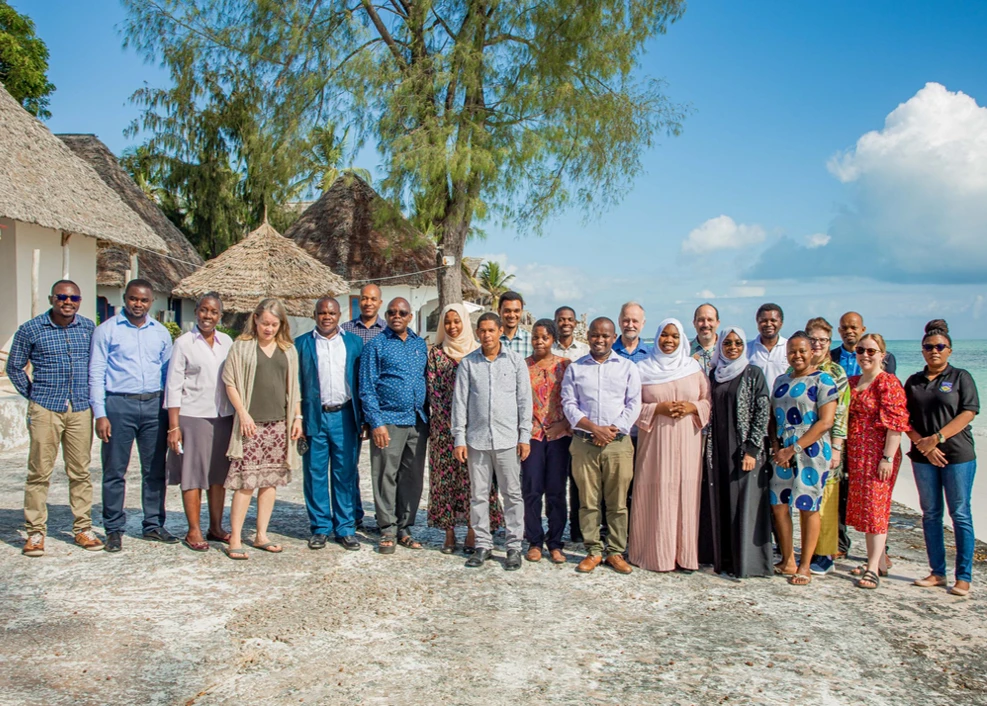
An eight-university consortium delivers it, coordinated by the University of Turku with Turku University of Applied Sciences and Novia UAS from Finland, and five Tanzanian universities — the University of Dar es Salaam, Ardhi University, Sokoine University of Agriculture, the State University of Zanzibar and Moshi Co-operative University. It builds on two decades of UTU–Tanzania cooperation (since 2003) and the preceding HEI-GIS (2013–15) and Geo-ICT (2017–2020) projects.
The central method is Multi-Competence Learning (MCL) — a challenge-based approach delivered through five co-creative “challenge campaigns” (2–3 months each), organised with innovation-ecosystem actors and problem owners such as Dlab, Sahara Ventures and Funzi. Students develop four competence domains at once: understanding real societal problems in space and time; collecting and using open geospatial data and open-source Geo-ICT tools; working in multi-stakeholder teams; and designing climate-smart, resource-efficient solutions.
GeoICT4e produces three outputs: HEI staff able to plan and run MCL teaching (25–30 staff, five campaigns, 100+ professional visits); students with open access to digital e-learning assets — a Tanzania GeoNode of 200–300 datasets and 40–50 nugget-sized mini-MOOCs on the Digicampus platform; and 1,000–1,500 students with improved digital multi-competences. The practices are captured in a Multi-Competence Learning (MCL) Playbook, and 10–12 degree programmes with 50+ courses are revised with open digital content. The project couples tightly with the World Bank–funded Tanzania Resilience Academy, which supplies digitally literate students from its mass-internships, and follows a gender-active (50% female) and Citizen-Panel community-engagement approach.
Objectives
- Build HEI staff capacity to plan and deliver Multi-Competence Learning (MCL) in geospatial and ICT teaching
- Run five co-creative challenge campaigns with innovation-ecosystem actors and problem owners
- Open up digital e-learning assets — a Tanzania GeoNode (200–300 datasets) and 40–50 mini-MOOCs on Digicampus
- Improve the digital skills and multi-competences of 1,000–1,500 Tanzanian students
- Revise 10–12 degree programmes and 50+ courses with open digital learning content
- Publish a Multi-Competence Learning (MCL) Playbook for scalability across Africa
- Advance gender-active participation (50% female target) and Citizen-Panel community engagement
Key activities
Project details
Impact at a glance
Project partners

University of Turku
Coordinator (University of Turku, Finland)

Turku University of Applied Sciences
Partner university (Finland)

Novia University of Applied Sciences
Partner university (Finland)
Ardhi University
Partner university (Tanzania)
University of Dar es Salaam
Partner university (Tanzania)

Sokoine University of Agriculture
Partner university (Tanzania)

State University of Zanzibar
Partner university (Tanzania)
Moshi Co-operative University
Partner university (Tanzania)
Project outputs
Impact, data & learning resources
📈
Impact & outcomes
📘
Training materials
💾
Datasets produced
The people behind the project
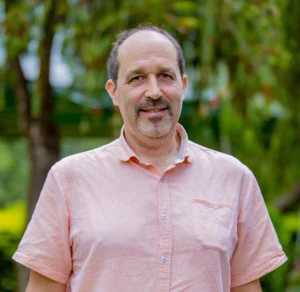
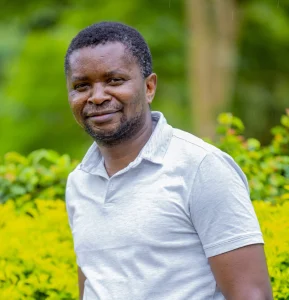
Meet the team
Researchers, practitioners and community leaders driving impact on the ground.






Reports & publications
View all reports →Related content
PROJECT
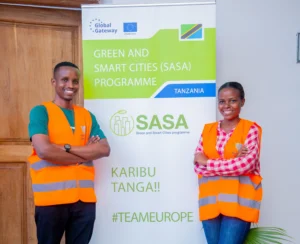
Resilience Academy for ProWAS-SASA
PROJECT
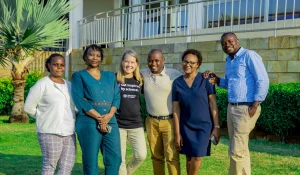
Tanzania Resilience Academy
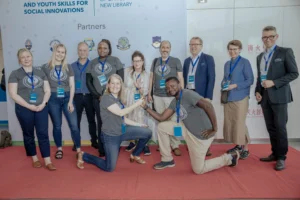
PROJECT
DIDAIhub
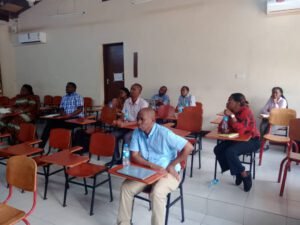
BLOG POST
Ardhi University Hosts Successful GeoICT4e Dissemination & Training: Raising Awareness on eLearning & Project Impact
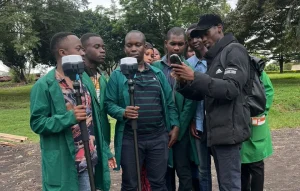
BLOG POST
Enhancing Timber Harvesting Planning with Centimeter Precision: The Role of Emlid Reach RS2 GPS Receivers in GeoICT4e’s Educational Transformation
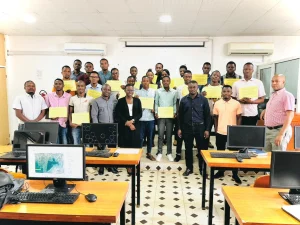
BLOG POST
GEOICT4e concludes 8 weeks of the Multi competence Challenge Learning Program
BLOG POST
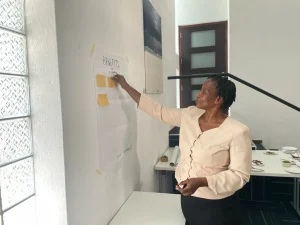
GeoICT4e experts delve into local e-learning and challenge -based learning solutions in Tanzania
BLOG POST
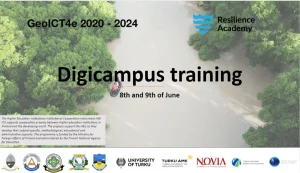
DigiCampus Training for GeoICT4e and Resilience Academy experts
BLOG POST
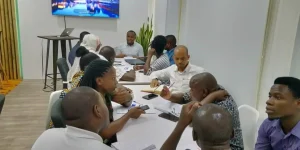
Kick-off to Multicompetence Learning and GeoICT4e Ways to Work
BLOG POST
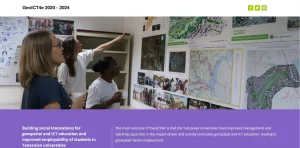
GeoICT4e project gets started
BLOG POST
Application for GeoICT4e successfully submitted
Have a project in mind?
Partner with Resilience Academy to map hazards, open geospatial data and build resilience with communities across Tanzania.