
STUDENT PLACEMENTS · INDUSTRIAL TRAINING
Industrial placement, reimagined for a data-driven Tanzania
Where young people learn digital skills by producing the data their cities need which is a transformative, field-based training model that turns students from passive learners into active contributors to Tanzania's data ecosystem through digital mapping, open tools and real community challenges.
The service at the heart of the model
A placement is not job-shadowing and not a classroom exercise. Students work in supervised teams on a real task that a city, agency or the Climate Risk Database actually needs, and they finish with two things that last: a genuine digital skill, and a real dataset with their name on it.
This service was built and proven under the World Bank programme, and it is one reason the Academy outlived it. When the project ended, the community kept the placements running, and new partners now fund them for new needs. More than 1,500 students have taken part since 2018.
How a placement works
Before, during, after
Before
We start from a real data need. The university, host and client agree the task and the dataset to be produced. Students are selected to fit the work, complete a training week on the tools, and safeguarding is arranged first: consent, introduction letters, insurance and a named welfare lead.
During
Students work in supervised teams, never alone, with a local ward guide and a real-time support channel. They collect and check data with open-source tools and upload it to the Climate Risk Database. A stipend covers transport, lunch and connectivity. It is a safety measure, not a wage.
After
The dataset is delivered and published, students receive a certificate and, where the work fits a course, university credit. We ask every student what they learned and whether they felt safe, and use the answers to improve the next cohort.
The concept
What is a data-focused industrial placement?
Industrial placement is a long-standing part of higher education — a bridge between academic study and professional practice. But mainstream training often relies on observation rather than participation, leaving graduates without the hands-on experience they need.
Resilience Academy reimagines it. Our model embeds students directly within ongoing projects, data-driven workflows and real community challenges — so learning is experiential and applied. Grounded in guided self-learning, students design their own data-collection work and become active contributors to Tanzania's data ecosystem.
Beyond observation
Mainstream training relies on watching. Here, students participate — collecting, cleaning and using real data.
From classroom to community
Learning leaves the lecture hall and enters flood-prone wards, coastlines and city streets.
Learner to contributor
Participants become active contributors and data creators whose work feeds the Climate Risk Database.
Proven impact
What the placement model has delivered
Partner universities
Tools & skills mastered
Datasets produced
The program structure
An eight-week, four-phase journey
Foundational training
Geospatial tech, climate-risk concepts, data ethics and open tools — facilitated with OpenMap Development Tanzania and HOT.
Planning & preparation
Multidisciplinary teams prepare fieldwork with GPS, drones, ODK and QGIS.
Field data collection
Teams map flood-prone areas and coastal erosion across Dar es Salaam, Morogoro and Zanzibar.
Analysis & dissemination
Students clean, analyse and visualise data, present to stakeholders and publish to the Climate Risk Database.
Delivered across five partner universities — the University of Dar es Salaam, Ardhi University, the State University of Zanzibar, Sokoine University of Agriculture and the University of Turku — reaching 200+ students each year.
The ecosystem
Who makes placement work
Students
Gain applied, field-based skills and become data creators.
Universities
Embed real projects and academic credit into the curriculum.
Host organizations
Bring live challenges and mentor the next generation.
Government & authorities
Get better data for planning and disaster-risk decisions.
International partners
OpenMap Development Tanzania, HOT and others co-deliver.
Communities & leaders
Shape and benefit from maps of their own neighbourhoods.
Technology & open data
Open tools and platforms carry the data forward.
Donors & partners
Fund and sustain the model at scale.
Tools & skills
The tools and skills you master
Live from the portal
See placement in action
Current and past placement cohorts, pulled live from the Resilience Academy portal — who is running, when, and how many students took part.
From the field
Placement stories
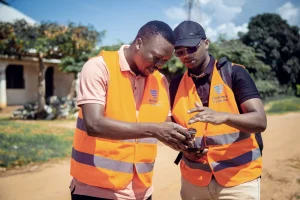
Resilience Academy to Train Youth in Flood Mapping Using Mobile Tools
Written by Msilikale Msilanga Resilience Academy is working in partnership with GIZ to empower young university alumni by involving them in flood mapping activities in Tanga. This initiative provides hands-on learning opportunities focused on using mobile phones for data collection. As part of this effort, 16 recent graduates from Ardhi University are participating in the […]
Read more →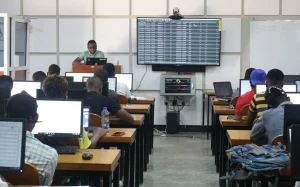
Training on mobile data collection and QGIS for data visualization and mapping to Sokoine University students
Blog by Ernest Mauya and Msilikale Msilanga The increasing availability of Geospatial technologies and open data is making a global impact on Natural Resources Management and Conservation. With local talents, […]
Read more →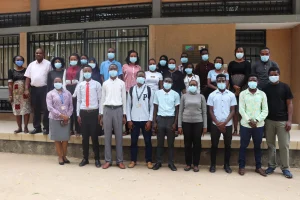
Industrial training program for the provision of E-learning skills and practical experiences to university students.
Written by Msilikale Msilanga Group photo of University students, university staff, and OMDTZ team. This Month; July 2021, the Resilience Academy is partnering with OMDTZ, The World Bank and other partners to engage university students from UDSM, ARU, SUA and SUZA to participate in the industrial training program. Industrial Training is aimed to equip university […]
Read more →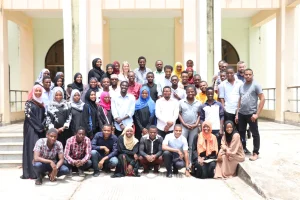
150 University Student have Attended Industrial Training
150 University studends have attended the industrial training coordinated by Resilience Academy team. These student are coming from the University partners of Resilience Academy which are University of Dar es Salaam, The State University of Zanzibar as well as the Ardhi University. 150 students are divided in distribution from each University 50 students each. The […]
Read more →Be part of the placement model
Whether you are a student, a university or a host organisation, there is a place for you in Tanzania's data-driven placement movement.