The GeoICT4e project team has almost 60 experts from Finland and Tanzania – of which around twenty experts are from Finland. Tanzanian experts have been able to organize some local meetings between their own teams, and to collaborate with each other. Small teams of Finnish experts has been able to visit Tanzania two times. Otherwise, we have worked mostly online for over a year now.
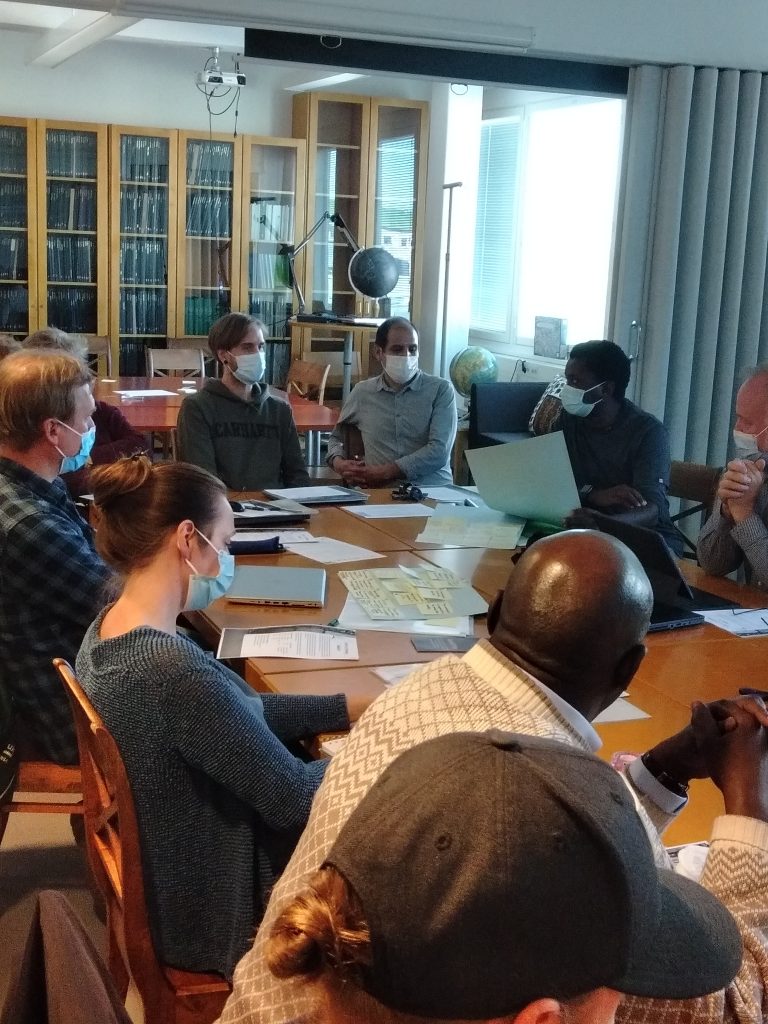
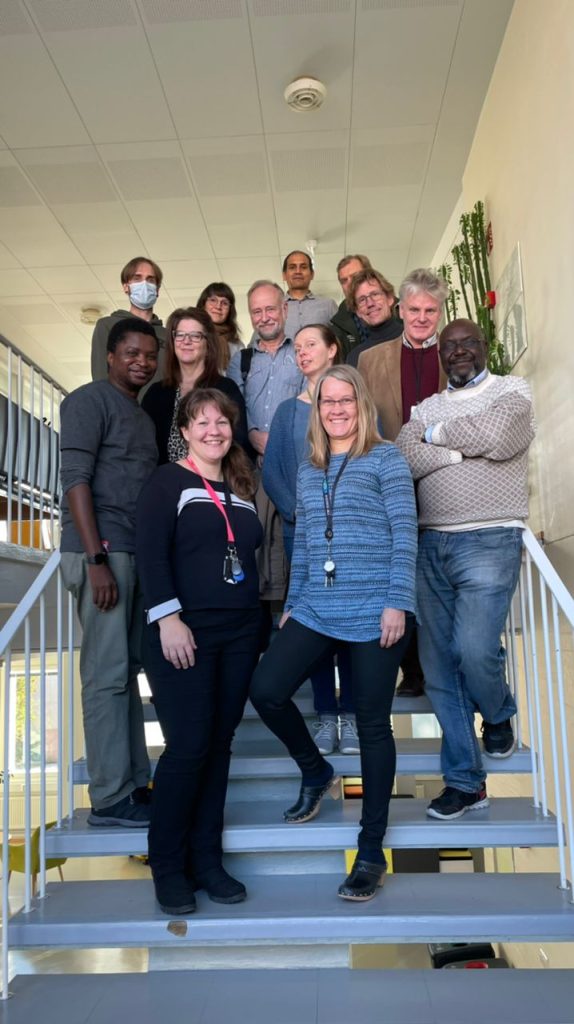
As the Covid19-situation has improved in Finland, and the rate of taken vaccinations is high, we were also able to organize a bigger meeting physically for the GeoICT4e experts working in Finland. Sixteen experts from the University of Turku, Turku University of Applied Sciences, and Novia University of Applied Sciences gathered for a half-day workshop to the Department of Geography and Geology, at the University of Turku, 27 September 2021. The aim of the workshop was to check the status of various project activities, develop common practices for the collaboration of project experts, and to plan the overall schedule and collaboration of the GeoICT4e project further, without forgetting to team-up also between the Finnish experts.
Getting-to-know, Reviewing, Identifying, Acknowledging and Exploring
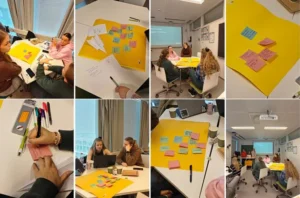
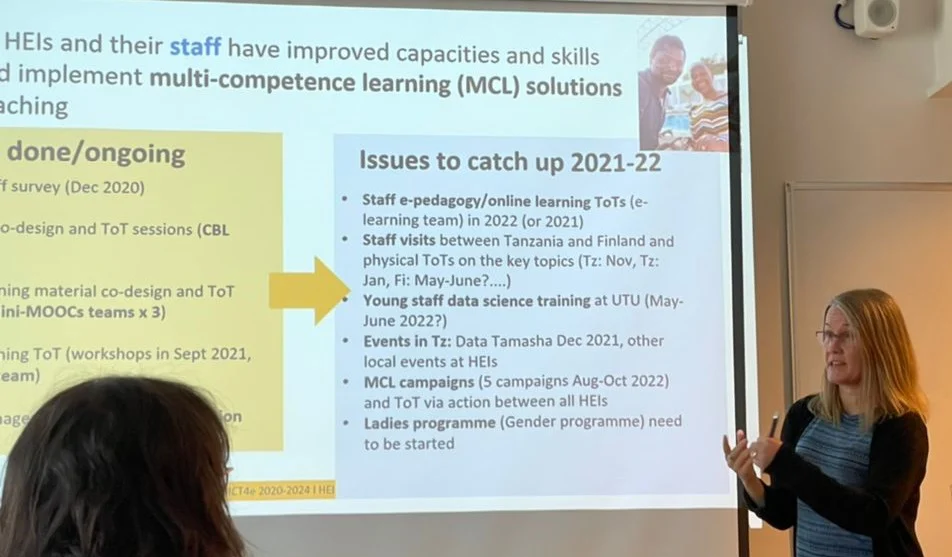
We started with a common lunch to get-to-know and share regards. After lunch, Prof. Niina Käyhkö provided an overview of the started project activities and the ones to catch up. She also reminded us of the project goals and we discussed of the needed modifications due to the continuing Covid-19 situation. Then, we had two sessions of group work.
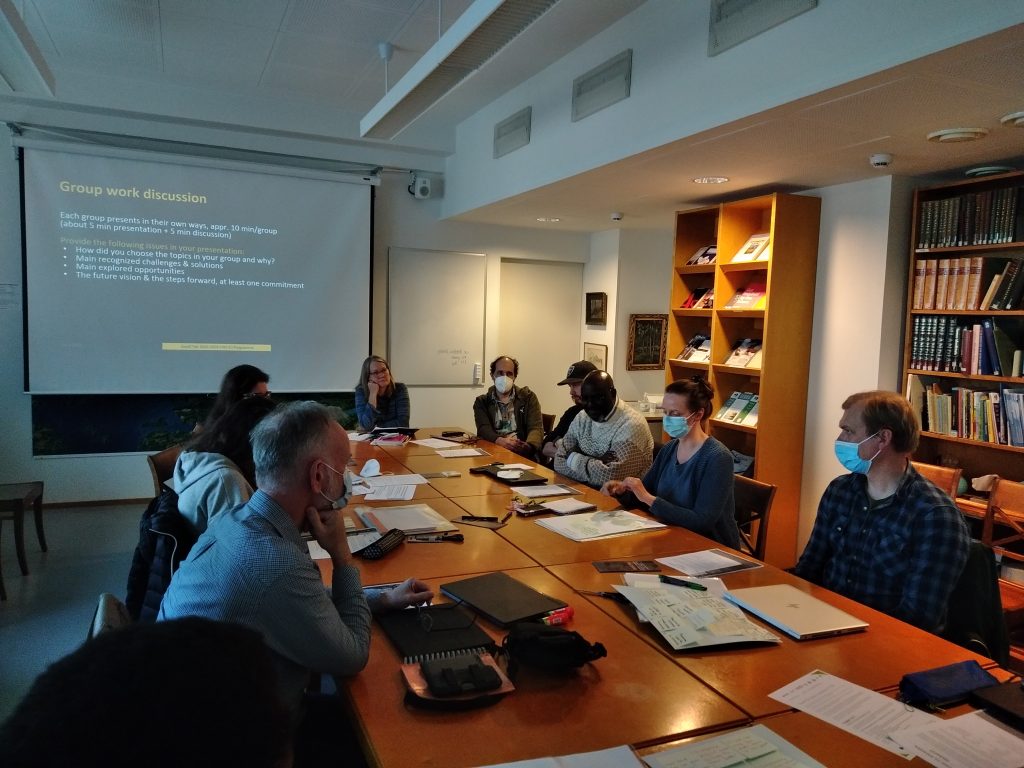
Project Manager Rita Rauvola and Geospatial and ICT expert Vesa Arki facilitated the group work. In the first part, we aimed to identify and acknowledge the possible challenges, skill gaps and needs in the ways of working together. In the second part, we aimed to solve the challenges, and explore the future opportunities for Finnish experts and Finnish organizations in the project. Even though the core of the project aims for institutional development and skills growth in Tanzanian Higher Education Institutions and boosting innovations in the society around them, we have to recognize also our own skills growth and the ways to utilize the learning material produced in our organizations and our society, too. We also collaborate closely with the SUSIE project, which is also funded from the HEI ICI Programme, as well as the Tanzanian Resilience Academy funded by the World Bank, so it was important to discuss about the activities from the projects’ synergies’ perspective as well.
The discussions were lively. For many this was the first physical workshop during the last year. If we think about the difference with online and physical meetings pedagogically, the need for physical meetings is clear: When you meet someone physically, you use more senses and muscles in your body and thus activate more areas in your brain than when communicating via computer screen. Using multiple senses simultaneously is studied to help in learning and remembering things. Thus, in online meetings you need to make more effort to remember the topics discussed and agreed on. We all agreed that after this workshop, and after meeting most of the Finnish experts also physically, we can learn how to communicate and collaborate better with each other also online.
Rita Rauvola. Project Manager, GeoICT4e
In GeoICT4e, we aim to keep the next group meeting later in this autumn for the Finnish organizations to continue from the workshop results. We also learned to speak some Swahili with the lead of Prof. Niina Käyhkö and Msilikale Msilanga (University of Turku) who have a long experience in Finnish-Tanzanian development projects. After learning some words and habits, we are all looking forward to travelling to Tanzania as soon as possible.